Type “baddie” into any social app and you’ll drown in results — makeup tutorials, outfit posts, gym selfies, entire lifestyle brands. But scroll past the looks for a second and a simpler question pops up: what does the word actually mean? Where did it come from, and how did one slang word turn into a whole aesthetic?
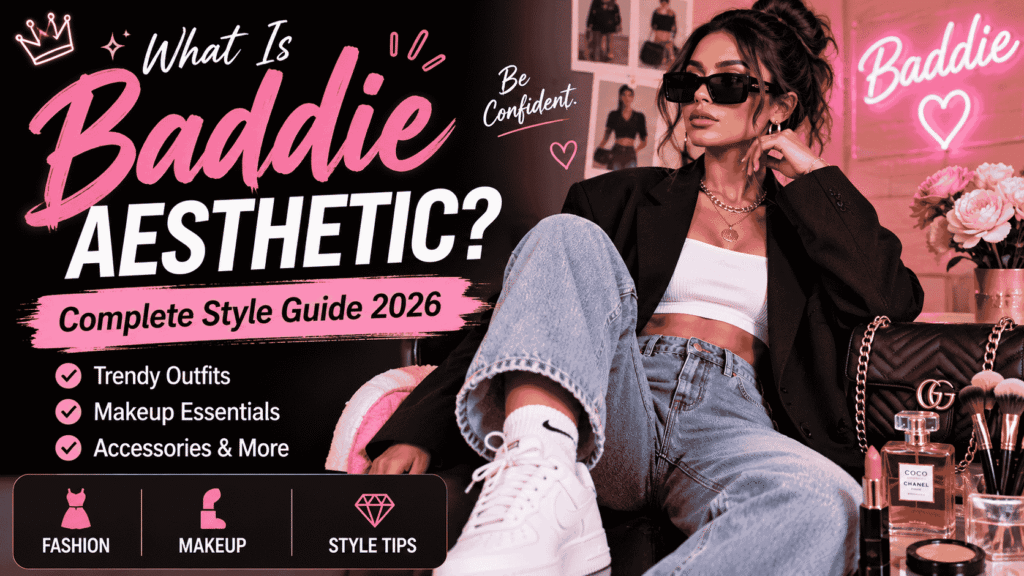
This page is the meaning explainer. If you want the full breakdown of the look itself — the outfits, makeup and styling — that’s our complete baddie aesthetic style guide. Here, we stick to the word: its definition, its roots, and why it stuck.
What does “baddie” mean?
In modern slang, a baddie is a woman who is confident, stylish, attractive, and completely unbothered by other people’s opinions. The word describes an attitude as much as an appearance. A baddie takes care of herself, knows her worth, sets her own standards, and doesn’t shrink herself to make anyone comfortable.
That’s why you’ll hear it used as praise between friends — “okay, baddie!” — the way an earlier generation said “queen” or “boss.” It’s less about fitting one beauty standard and more about carrying yourself like you own the room. The polished look is just the visible part.
Where the word came from
“Baddie” comes from Black American slang. Its roots reach back to “bad” used as a compliment — in Black English, calling someone “bad” has meant impressive, powerful, and attractive for decades (think of the old blues and hip-hop tradition where “bad” is high praise, not criticism). By the early 2010s, “baddie” had crystallized as the noun form: a woman who is exceptionally stylish and self-assured.
Like a lot of Black slang, the word traveled. What started in Black culture — in music, in everyday speech, in early Instagram captions — moved into mainstream internet language, and from there into global youth slang. Knowing that origin matters, because the aesthetic built on top of the word borrows heavily from Black fashion and beauty culture too: the hair, the makeup techniques, the silhouettes, the attitude.
How Instagram and TikTok turned it into an aesthetic
The word got a face in the mid-2010s. Instagram creators popularized a recognizable baddie look — sharp brows, long lashes, glossy lips, sleek hair, fitted outfits — and “Instagram baddie” became its own category. The aesthetic was aspirational but achievable: no designer budget required, just precision, confidence, and good lighting.
TikTok later widened it. The baddie umbrella now covers sub-styles — soft baddie, streetwear baddie, clean-girl baddie — and the meaning loosened from one strict look into a mindset: take care of yourself, look intentional, move with confidence. That flexibility is exactly why the word survived while other slang faded. It evolved instead of expiring.
“Baddie”, “Instagram baddie” and “baddie aesthetic” — not quite the same thing
These three get used interchangeably, but they point at slightly different things. A baddie is the person — the confident, put-together woman herself. An Instagram baddie is the classic mid-2010s version of that person, tied to the platform’s signature glam look. The baddie aesthetic is the broader style system around her: the fashion, makeup, nails, accessories, color palette, and overall vibe that anyone can draw from, whether or not they’d call themselves a baddie.
Think of it like this: the word names the person, the aesthetic names the style language she speaks.
Is being called a baddie a compliment?
Yes — in the contexts where it’s normally used, “baddie” is unambiguously praise. It means stylish, confident, attractive, and self-possessed. Nobody captions their best photo “feeling like a baddie” as an insult to themselves.
Old-fashioned dictionaries might still list “baddie” as a villain in a story — the “bad guy” of a film. That older meaning exists too, and context tells them apart instantly: nobody discussing outfits and makeup is talking about movie villains. In fashion and social media language, baddie is a crown, not an accusation.
Like the meaning? Here’s the look itself
If the mindset resonates, the style is very learnable. Start with our complete baddie aesthetic style guide for the full picture, then build your kit with the baddie makeup essentials and a few affordable baddie wardrobe essentials — and when the season turns, our baddie winter outfit ideas show how the look adapts to cold weather. None of it requires a big budget. The entry fee is intention, not money.
Conclusion
“Baddie” started as Black American slang for a woman who is exceptionally stylish and confident, traveled through Instagram and TikTok, and grew into a full aesthetic — but the core meaning never changed. It’s not really about the lashes or the outfit. It’s about self-possession: knowing how you want to show up in the world and doing it on purpose. The look is just how that confidence dresses.
Frequently Asked Questions
What does baddie mean in slang?
In slang, a baddie is a confident, stylish, attractive woman who carries herself with self-assurance. It’s used as a compliment and describes an attitude — self-care, high standards, and being unbothered by outside opinions — as much as a look.
Where did the word baddie originate?
“Baddie” comes from Black American slang, building on the long tradition of using “bad” as praise in Black English and hip-hop culture. It took its modern noun form in the early 2010s and spread worldwide through social media.
What is the difference between a baddie and the baddie aesthetic?
A baddie is the person — confident and put-together. The baddie aesthetic is the style system associated with her: the fashion, makeup, nails, accessories, and overall polished vibe. The person is the inspiration; the aesthetic is the look anyone can adopt.
Is baddie a compliment or an insult?
A compliment. In fashion and social media contexts, being called a baddie means you’re stylish, confident, and attractive. The only other common meaning — a villain in a film — belongs to a completely different context and usage.
Can anyone be a baddie?
Yes. The modern meaning centers on confidence, self-care, and intentional style rather than a specific body type, skin tone, or budget. The aesthetic is deliberately adaptable — the requirement is self-possession, not a particular look or price tag.

